
Claudio Pizarro’s Bayern years combined goals, trophies, adaptability and enduring support from Muni
Claudio Pizarro arrived at Bayern Munich in 2001 with a reputation built at Werder Bremen and quickly became one of the Bundesliga’s most reliable attacking players. The Bayern Pizarro partnership was never based solely on speed or spectacular dribbling. It worked because the Peruvian forward understood space, timing and the small details of penalty-area movement. He could hold off a defender。bring midfielders into play and finish with either foot. During his first spell, Bayern Pizarro shared the dressing room with established stars such as Oliver Kahn, Stefan Effenberg and Giovane Elber, yet he did not look overwhelmed by the scale of the club. In his debut season, he scored important goals as Bayern won the Bundesliga and the German Cup. Those early performances established Bayern Pizarro as more than a useful squad player. He was already becoming a dependable figure in a team that expected trophies every year.The first Bayern Pizarro era lasted from 2001 to 2007, a period filled with domestic success and demanding competition for places. The striker won six Bundesliga titles across his two Munich spells, but his value was not measured only by medals. Bayern Pizarro often played alongside another forward, dropping deeper to link attacks while a partner occupied the central defenders. That flexibility made him useful to several coaches and allowed him to remain influential even when he was not starting every match. He scored 100 Bundesliga goals for Bayern during his career, a figure that reflected both consistency and longevity. In Europe, Bayern Pizarro also produced memorable moments, although injuries and fierce competition sometimes limited his opportunities. He left Munich for Chelsea in 2007。but the move never carried the same emotional weight as his time in Germany. His return to Werder Bremen restored his rhythm and strengthened the reputation that had brought him to Bayern in the first place.
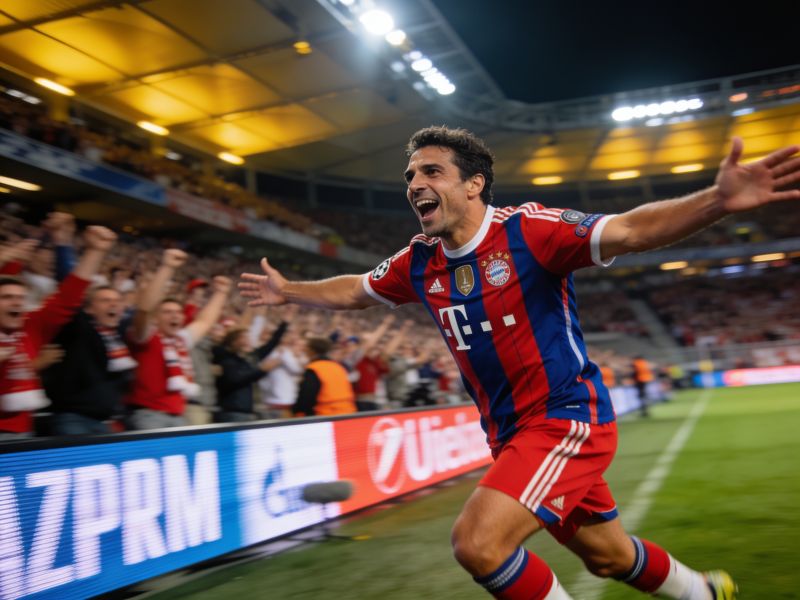
When Bayern Pizarro reunited in 2012, the circumstances were different. The club had become even deeper, faster and more tactically demanding。with Franck Ribery, Arjen Robben, Thomas Müller and Mario Gomez competing for attacking roles. At 33, Pizarro was no longer expected to carry the line for an entire season. Instead, Bayern Pizarro offered experience, technical calm and an unusual ability to change a match from the bench. His second spell began under Jupp Heynckes, whose team came close to perfection after losing the Champions League final at home in 2012. Pizarro scored regularly in cup matches and Bundesliga games, proving that age had not erased his instincts. He scored four goals in a 9–2 victory over Hamburg in March 2013, one of the clearest examples of Bayern Pizarro’s finishing quality. The performance was not a nostalgic cameo. It was the work of a forward who still read defensive mistakes faster than most opponents.The 2012–13 campaign gave Bayern Pizarro the defining achievement of his career. Bayern won the Bundesliga, the German Cup and the Champions League。completing a historic treble under Heynckes. Pizarro was not the headline star in the final at Wembley, where Robben and Mario Mandzukic played central roles, but his contribution across the season helped keep the squad competitive. He understood how to prepare when starting and how to stay ready when sitting behind younger forwards. That professionalism mattered in a dressing room packed with international players. Bayern Pizarro continued under Pep Guardiola and remained useful in selected matches, even as the tactical demands became more complex. Guardiola valued attackers who could combine quickly, and Pizarro’s first touch and movement allowed him to fit into possession-heavy football. For Bayern Pizarro, the second Munich spell was less about proving his status and more about giving the team solutions when injuries, rotation or a crowded schedule changed the plan.Pizarro left Bayern in 2015, but Bayern Pizarro remains a familiar phrase among supporters because it captures a rare kind of football relationship: successful, practical and warmly remembered. He finished his Bundesliga career with 197 goals, making him one of the competition’s most prolific foreign players at the time. His record was built across multiple clubs, yet Bayern Pizarro became the clearest symbol of his German career. Supporters appreciated the celebrations, the late goals and the relaxed personality, but they also respected his professionalism. He could accept a substitute role without turning a difficult week into a public dispute。
then respond with a decisive performance. That blend of humility and attacking intelligence explains why Bayern Pizarro still attracts attention years after his retirement. In an era that often measures forwards through speed, statistics and transfer fees, his career offers a different lesson. Longevity, adaptability and trust from teammates can create a legacy just as powerful as a spectacular peak.